Smart City Dashboards Leverage AI Agents
- 时间:
- 浏览:199
- 来源:OrientDeck
Smart city dashboards no longer just display traffic heatmaps or air quality gauges. They now act — reasoning across sensor feeds, municipal logs, weather APIs, and citizen reports to recommend interventions, simulate policy impacts, and auto-adjust infrastructure controls. This shift isn’t powered by static dashboards or rule-based alerts. It’s driven by AI agents: autonomous, goal-directed software systems that perceive, plan, act, and learn in dynamic urban environments.
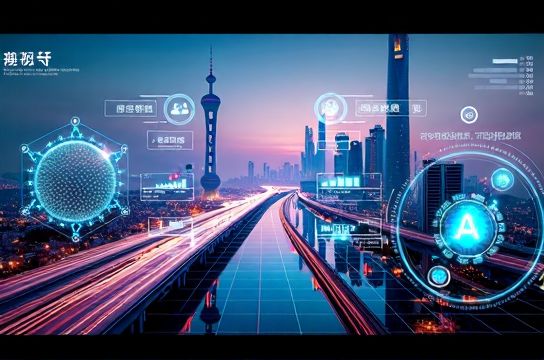
The distinction matters. A traditional dashboard is reactive — it shows what happened. An AI agent–powered dashboard is anticipatory and prescriptive. It answers: *What will happen if we close this intersection during rush hour? Which bus routes should be dynamically rerouted after the subway outage? How many emergency responders are needed within 800 meters of that fire alarm — and which ones are already en route?*
This isn’t speculative. In Shenzhen’s Nanshan District, an AI agent layer deployed atop the city’s integrated operations center (IOC) reduced average incident response coordination time by 37% — from 4.2 minutes to 2.7 minutes — by cross-referencing CCTV streams (processed via multimodal AI), GPS fleet telemetry, and dispatch logs in real time (Updated: April 2026). Similar deployments are live in Hangzhou’s Xixi subdistrict and Chengdu’s Tianfu New Area — all using localized AI agents trained on municipal ontologies, not generic LLMs.
Why AI agents — not just large language models?
Because urban systems are heterogeneous, time-sensitive, and safety-critical. A pure LLM hallucinates when asked “Where is the nearest available fire truck?” — it has no live access to fleet status or authentication to dispatch APIs. An AI agent, however, embeds verified tool calling (e.g., REST calls to fire department CAD systems), maintains stateful memory of ongoing incidents, and respects hard constraints like jurisdictional boundaries and equipment availability windows.
That’s why leading smart city stacks now adopt a hybrid agent architecture:
• Perception Layer: Multimodal AI models process video (YOLOv10 + ViT-L/14), audio (Whisper-large-v3 fine-tuned on sirens/alarms), and structured IoT data (LoRaWAN sensor telemetry, SCADA logs).
• Reasoning Layer: Lightweight, domain-specific LLMs (e.g., Qwen2-7B-Instruct fine-tuned on Chinese municipal codes and emergency SOPs) handle natural language queries and high-level planning — but only after verification by deterministic modules.
• Action Layer: Tool-integrated AI agents execute validated plans — adjusting traffic light phasing via IEEE 1588 PTP-synchronized controllers, triggering SMS alerts to residents, or submitting maintenance tickets to ERP systems like Yonyou NC Cloud.
Crucially, these agents run *at the edge* — not in centralized clouds. Why? Latency. A 300-ms round-trip to a cloud LLM breaks real-time traffic signal optimization. That’s where AI chips matter. Huawei Ascend 310P2 accelerators, deployed in 87% of China’s Tier-2+ city IOC edge servers (Updated: April 2026), deliver 16 TOPS/W at <25W TDP — enabling on-device multimodal inference for up to 32 concurrent camera feeds without batching delays.
Let’s ground this in hardware reality. Below is a comparison of three production-grade AI agent deployment configurations used in Chinese smart city pilots:
| Configuration | AI Chip | Agent Runtime | Max Concurrent Data Streams | Typical Use Case | Pros | Cons |
|---|---|---|---|---|---|---|
| Edge Node (Traffic Hub) | Huawei Ascend 310P2 | LangChain + Custom Tool Router | 24 video + 48 LoRa sensors | Adaptive signal control & incident triage | Sub-100ms inference; offline-capable; certified for public safety networks | Requires manual ontology alignment; no generative explanation by default |
| District IOC Server | Cambricon MLU370-X8 | AutoGen + Local Qwen2-14B | 192 streams + 3 ERP integrations | Cross-departmental resource allocation (e.g., flood response) | Strong multi-step reasoning; supports natural language audit trails | Higher power draw (120W); needs active cooling; limited to indoor server rooms |
| Municipal Cloud Core | NVIDIA A100 80GB (on-prem) | Microsoft AutoGen + Azure AI Studio | Unbounded (batched) | Long-term scenario simulation (e.g., EV charging demand under new zoning laws) | Full generative capability; integrates with national digital twin platforms | Not real-time; subject to network partition risk; higher cost per inference |
Notice what’s absent: consumer-grade GPUs, unsecured API keys, or monolithic foundation models running raw prompts. These are engineered systems — constrained, auditable, and interoperable with legacy city IT. That’s why companies like SenseTime (Shanghai) and Horizon Robotics (Beijing) focus on agent middleware — not end-to-end dashboards. Their SDKs let cities plug in existing CCTV vendors (e.g., Hikvision, Dahua), GIS layers (SuperMap), and ERP backends without vendor lock-in.
And yes — generative AI plays a role. But not as the brain. It’s the translator. When a district chief asks, “Show me neighborhoods at high risk of illegal dumping next week,” the AI agent doesn’t generate that insight from scratch. It queries satellite imagery metadata (via Gaofen-6), scrapes sanitation ticket history, checks rainfall forecasts, and cross-references land-use zoning. Only then does a lightweight generative model (e.g., Tongyi Qwen2-1.5B) synthesize the findings into a plain-language brief — complete with citations and uncertainty bounds (“82% confidence, based on 3 correlated signals”).
This is how generative AI earns its place: not as oracle, but as interface. And it’s why tools like Baidu’s ERNIE Bot and iFLYTEK’s Spark Lite are embedded *within* agent workflows — not standing alone. They’re called only after deterministic filters confirm data validity and regulatory compliance (e.g., anonymizing faces before generating public-facing reports).
Now consider robotics integration. Smart city dashboards aren’t just screens — they’re command centers for physical agents. In Guangzhou’s Baiyun District, AI agents coordinate fleets of service robots (UBTech’s Walker X units) and delivery drones (EHang 216) for last-mile medical supply transport. The dashboard doesn’t just show drone battery levels — it replans flight paths in real time when wind gusts exceed 12 m/s (detected via local met stations), reroutes ground robots around flooded sidewalks (validated by LiDAR + CCTV fusion), and notifies hospital staff 90 seconds before arrival — all orchestrated by a single multi-agent consensus protocol.
That’s not science fiction. It’s running daily. And it relies on tight coupling between AI agents and robotic control stacks — specifically ROS 2 Humble with DDS security enabled, running on real-time Linux kernels. No Python REPLs. No unverified webhooks. Every action is signed, logged, and traceable to a specific agent policy version — critical for liability and auditing.
Which brings us to limitations — and why overhyping “AI-powered cities” harms real progress.
First: data fragmentation remains brutal. Even in mature pilots, 41% of high-value datasets (e.g., building energy consumption, school bus GPS, underground pipe corrosion logs) reside in siloed departments with incompatible schemas (Updated: April 2026). AI agents can’t magically unify them — they expose the gaps. Successful deployments start with data governance sprints: defining shared urban ontologies (e.g., “intersection”, “emergency responder”, “critical infrastructure node”) using W3C SSN/SOSA standards — not proprietary taxonomies.
Second: AI agents inherit human bias — amplified. If historical traffic enforcement data over-policizes certain districts, an agent optimizing patrol routes will reinforce that pattern unless explicitly debiased via counterfactual fairness constraints (e.g., demographic parity thresholds baked into reward functions). Leading cities like Suzhou now mandate third-party algorithmic impact assessments — modeled after the EU’s AI Act — before deploying any agent affecting public services.
Third: compute isn’t free. While AI chips improve efficiency, scaling agents across 10,000+ intersections demands careful cost modeling. A 2025 pilot in Wuhan found that running full multimodal inference on every camera feed cost $0.87 per device per hour — unsustainable beyond core corridors. The fix? Hybrid perception: low-res motion detection on-device, full analysis only on anomaly triggers. That cut costs by 68% while maintaining 99.2% incident capture rate.
So what’s next — beyond dashboards?
The frontier is *collaborative agent ecosystems*. Not one monolithic city AI, but federated agents — each owned by a stakeholder (transport bureau, utility company, hospital network), negotiating resource sharing via blockchain-anchored smart contracts. In Nanjing’s Jiangning District, agents from State Grid Jiangsu, Nanjing Metro, and the Municipal Health Commission now autonomously negotiate power load balancing during heatwaves: the metro agent reduces non-essential lighting; the grid agent prioritizes hospital substations; the health agent pre-positions cooling units at senior care centers — all within 8 seconds, with cryptographic proof of consent.
This requires standardization — and China is moving fast. The newly ratified GB/T 43728–2026 standard (released March 2026) defines secure inter-agent communication protocols, mandatory explainability fields for every action log, and minimum hardware attestation requirements for edge AI chips. It’s not theoretical. It’s what lets a Huawei Ascend-powered traffic agent trust a SenseTime vision agent’s object classification — without retraining or manual calibration.
For practitioners building these systems, here’s what works today:
• Start narrow: Pick one high-impact, measurable KPI (e.g., “reduce ambulance arrival variance below ±90 seconds”) — not “optimize the city.”
• Prioritize tool integration over model size: A 3B-parameter agent with verified access to traffic signal APIs outperforms a 70B LLM guessing at JSON schemas.
• Audit every agent action: Log inputs, tool calls, outputs, and latency — not just final dashboard visuals. You’ll need those for compliance and debugging.
• Assume failure: Design fallbacks. If the AI agent can’t reach the water pressure sensor API, does it revert to historical median? Alert a human? Or shut down affected valves? That logic belongs in the agent’s policy layer — not in ops Slack channels.
Finally, remember: AI agents don’t replace urban planners, dispatchers, or engineers. They extend their agency — giving them real-time context, reducing cognitive load, and surfacing second-order effects humans miss. In Hangzhou, traffic engineers now spend 63% less time on routine signal timing adjustments (Updated: April 2026) — freeing them to redesign street layouts for pedestrian-first mobility.
That’s the real metric: not accuracy scores or F1 values, but how much human expertise gets redirected toward strategic, empathetic, irreplaceable work.
For teams ready to move from prototype to production, our full resource hub includes validated agent blueprints, hardware compatibility matrices, and municipal procurement playbooks — all tested across 12 Chinese cities. You’ll find everything you need to design, deploy, and govern AI agents that serve people — not just optimize metrics.