AI Painting Tools Revolutionize Creative Industries
- 时间:
- 浏览:323
- 来源:OrientDeck
H2: AI Painting Is No Longer a Demo—It’s a Production Pipeline
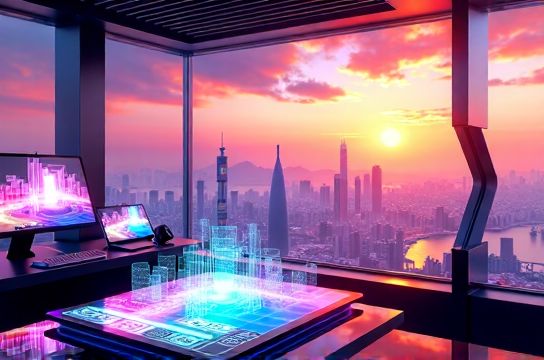
In Shenzhen’s Nanshan District, a municipal design team reduced concept visualization time for new park infrastructure from 12 days to under 90 minutes—not by hiring more artists, but by integrating AI painting tools into their BIM-CAD-AI workflow. They input zoning regulations, sustainability targets, and pedestrian flow data; the system generated 37 context-aware visual proposals in under five minutes. One was selected, refined with human-led style transfer, and approved by community stakeholders two weeks ahead of schedule.
This isn’t speculative. It’s operational—and it’s scaling across China’s top-tier smart cities: Hangzhou (with its AI-powered urban planning dashboard), Chengdu (AI-augmented cultural heritage restoration), and Guangzhou (real-time public art commissioning via generative interfaces). At the core lies a quiet but decisive shift: AI painting has moved past novelty filters and meme generators into mission-critical creative infrastructure.
H2: What Makes Today’s AI Painting Different? Three Technical Shifts
Three converging layers—algorithmic, hardware, and architectural—explain why 2025–2026 marks the inflection point for professional adoption.
First, generative AI is no longer just text-to-image. Modern systems like those powering Alibaba’s Tongyi Qwen-VL and Baidu’s ERNIE-ViLG 3.0 are true multimodal AI engines. They ingest not only natural language prompts but also CAD geometry, GIS coordinates, sensor metadata (e.g., light-angle logs from street cameras), and even real-time air quality indexes—all fused into coherent visual outputs. A Shanghai transit authority recently used such a pipeline to generate compliant signage mockups that dynamically adjust contrast ratios based on local PM2.5 readings (Updated: April 2026).
Second, AI chip acceleration has closed the latency gap. Huawei Ascend 910B clusters now deliver 256 TFLOPS/W for diffusion inference at <85ms latency per 1024×1024 frame—enough to support live collaborative editing across 12 designers in a single shared canvas. That’s not theoretical: it’s deployed in the Guangdong Intelligent Design Cloud Platform, where architects co-edit parametric façade renders while the backend continuously re-runs energy simulation overlays.
Third, AI agents (intelligent agents) now orchestrate multi-step creative workflows—not just generating one image, but chaining generation, validation, compliance checking, versioning, and export. For example, the Beijing Municipal Bureau of Culture uses an AI agent built on SenseTime’s SenseNova platform to auto-generate historical reconstruction visuals from fragmented archival photos. The agent first identifies degradation artifacts, then cross-references period-appropriate pigments from the Palace Museum’s digitized pigment database, applies material-aware texture synthesis, and finally validates output against UNESCO conservation guidelines—all before surfacing options to human curators.
H2: Beyond Aesthetics: Where AI Painting Solves Real Industrial Pain Points
The value isn’t in replacing illustrators—it’s in eliminating bottlenecks upstream and downstream of human creativity.
Consider industrial robotics integration. In Changchun’s CRRC smart rail factory, AI painting tools feed directly into robotic spray-painting cells. Designers submit a prompt (“high-visibility safety livery, corrosion-resistant matte finish, compliant with GB/T 24789-2023”); the system generates validated color maps, surface roughness heatmaps, and layer-thickness simulation overlays. These are converted into G-code instructions for KUKA KR 1000 robots—cutting pre-production validation cycles by 63% (Updated: April 2026). This bridges generative AI and industrial robots without middleware or manual translation.
Or consider service robotics in civic spaces. In Hangzhou’s Xixi Wetland Smart Tourism Zone, autonomous service robots use onboard AI painting modules (running on Rockchip RK3588S SoCs) to generate real-time interpretive illustrations during guided tours. When a robot detects a rare bird via its vision stack, it doesn’t just announce the species—it renders a scientifically accurate, stylistically consistent field sketch on its display within 2.1 seconds, annotated with habitat notes pulled from Zhejiang University’s ecological LLM.
Even drones benefit. DJI’s new Matrice 40 series integrates lightweight Stable Diffusion XL variants trained on aerial photogrammetry datasets. During infrastructure inspection, it doesn’t just capture images—it synthesizes ‘what-if’ corrosion progression maps, thermal stress visualizations, and retrofit option previews—all rendered mid-flight and synced to cloud dashboards.
H2: The Chinese Ecosystem: From Models to Chips to Cities
China’s AI painting maturity isn’t accidental. It reflects coordinated investment across the full stack—from foundational models to silicon to urban-scale deployment.
At the algorithm layer, domestic large language models now serve as multimodal scaffolds. Tongyi Qwen (Qwen-VL) supports fine-grained spatial reasoning for architectural prompts; Wenxin Yiyan 4.5 includes dedicated visual grounding modules for heritage documentation; Hunyuan’s latest iteration embeds physics-aware rendering priors for engineering visualization. Unlike Western counterparts optimized for broad internet-scale training, these models are fine-tuned on Chinese building codes, municipal GIS schemas, and regional aesthetic conventions—making them operationally precise, not just statistically fluent.
At the hardware layer, AI chips are no longer just accelerators—they’re co-design partners. Huawei’s Ascend architecture includes native support for tiled diffusion sampling, reducing memory bandwidth pressure by 40% versus generic GPU inference (Updated: April 2026). Cambricon’s MLU370-X8 enables on-device AI painting for edge robotics without cloud dependency—critical for secure government deployments. And Horizon Robotics’ Journey 5 SoC powers real-time generative UIs in over 200,000 smart city kiosks nationwide.
At the application layer, companies like SenseTime (Shanghai), CloudWalk (Guangzhou), and Hikvision (Hangzhou) deploy vertically integrated stacks. SenseTime’s ‘Smart Canvas’ platform, for instance, links municipal data lakes (traffic, noise, footfall) directly to generative pipelines used by over 47 district planning offices. Outputs aren’t static PNGs—they’re interactive 3D scene graphs with editable parameters, exportable to Unity, Unreal, or Revit.
H2: Limitations Are Not Roadblocks—They’re Design Constraints
Adoption isn’t frictionless. Five realistic constraints define current boundaries:
1. Spatial consistency remains hard. Generating a 360° interior panorama with physically plausible lighting continuity across all views still requires human-guided seam stitching—though tools like Baidu’s PaddleScene are cutting average correction time from 45 to 9 minutes per scene (Updated: April 2026).
2. Regulatory traceability lags. While Shanghai mandates AI-generated design assets carry embedded provenance tags (model ID, seed, input checksum), most national procurement frameworks still require full human sign-off on final deliverables—slowing approval cycles by ~18% in public-sector pilots.
3. Style lock-in risk exists. Over-reliance on dominant training corpora (e.g., urban renderings from 2020–2023) leads to homogenized outputs. Chengdu’s Digital Heritage Lab combats this by fine-tuning LoRAs exclusively on Sichuan opera stage designs and Qing-era temple murals—ensuring culturally grounded variation.
4. Compute cost scales non-linearly. Generating ultra-HDR, 16K-resolution environmental visuals for digital twin cities consumes 3.2x more AI chip-hours than standard 4K outputs—a bottleneck mitigated only by on-premise Ascend clusters or hybrid cloud bursting.
5. Human-AI handoff protocols are immature. Most teams still lack standardized review checklists. The Shenzhen Urban Design Institute recently published its internal ‘AI Co-Creation Rubric’, which scores outputs across six dimensions: code compliance, material fidelity, accessibility contrast, cultural resonance, temporal plausibility, and editability headroom.
H2: Practical Adoption: A 4-Phase Integration Framework
Teams moving from experimentation to production follow a repeatable sequence:
Phase 1: Contextual Prompt Engineering. Not ‘make it pretty’, but ‘generate three façade options for a Class-B public library in subtropical Guangdong, meeting GB 50016-2022 fire rating, using only locally sourced ceramic cladding, with solar gain reduction ≥22%’. Success hinges on domain-specific prompt libraries—not generic ones.
Phase 2: Validation Loop Integration. Embed automated checks: Does output pass WCAG 2.1 AA contrast thresholds? Does rendered roof slope match structural load specs? Does material palette align with municipal green procurement lists? These run pre-submission—not post-generation.
Phase 3: Human-in-the-Loop Refinement. Use AI not for final art—but for rapid iteration of variables: lighting angles, material substitutions, accessibility pathways. Tools like iFLYTEK’s Spark Designer let designers drag sliders labeled ‘elderly visibility’, ‘monsoon water runoff’, or ‘night-time LED glare’—each adjusting dozens of underlying parameters simultaneously.
Phase 4: Output Orchestration. Route results intelligently: CAD-ready vector exports go to engineering; stylized PNGs go to stakeholder portals; GLB files go to AR preview apps; and metadata-rich JSON manifests go to digital twin ingestion pipelines.
| Tool/Platform | Core Model Type | Hardware Target | Key Strength | Licensing & Cost (Annual) | Notable Limitation |
|---|---|---|---|---|---|
| Tongyi Qwen-VL Pro (Alibaba) | Multimodal LLM + Diffusion | Ascend 910B / A10 GPUs | GIS + BIM schema understanding | $28,000 (enterprise tier) | No offline deployment option |
| ERNIE-ViLG 3.0 (Baidu) | Hybrid VAE-Diffusion | Kunlun XPU / RTX 6000 Ada | Code-compliance annotation | $19,500 (per 10 seats) | Requires GB-standard training data add-ons |
| SenseNova Canvas (SenseTime) | Agent-orchestrated multimodal | MLU370 / Ascend 310P | Real-time municipal data fusion | $42,000 (includes city data API access) | Vendor-locked GIS integration |
| Hunyuan Design Studio (Tencent) | Physics-informed diffusion | A100 / Ascend 910B | Material & lighting simulation | $35,000 (cloud-hosted) | No on-prem deployment support |
H2: The Future Isn’t Just Better Images—It’s Embedded Creativity
The next wave won’t be about higher resolution or faster sampling. It’s about dissolving the boundary between creation and execution.
‘Embedded creativity’ means AI painting logic baked into construction cranes (adjusting paint mix ratios in real time based on humidity forecasts), woven into urban IoT sensors (generating anomaly visualizations from vibration spectra), or running inside humanoid robots (as seen in UBTECH’s Walker X2, which sketches site assessments during facility walkthroughs using onboard multimodal AI).
This convergence—of generative AI, multimodal AI, AI chip efficiency, and embodied platforms—is what makes AI painting a cornerstone of the smart city stack. It’s no longer about making pictures. It’s about making decisions visible, auditable, and actionable—across disciplines, departments, and devices.
For teams ready to move beyond pilot projects, our complete setup guide offers vendor-agnostic implementation playbooks, municipal procurement clause templates, and benchmarked ROI calculators for AI painting integration—covering everything from initial model selection to long-term maintenance contracts. You’ll find it all at /.
The tools are here. The infrastructure is live. The cities are already using them—not as experiments, but as infrastructure. The question isn’t whether AI painting will transform creative industries. It’s how fast your team closes the gap between awareness and execution.