Connected Cars Use 5G for Real Time Traffic Management
- 时间:
- 浏览:232
- 来源:OrientDeck
If you're into smart cities or just hate sitting in traffic, here’s some exciting news: connected cars are now using 5G to talk to each other—and the roads—in real time. As someone who’s been tracking urban mobility trends for years, I can tell you this isn’t sci-fi anymore. It’s happening right now, and it’s changing how we manage traffic.
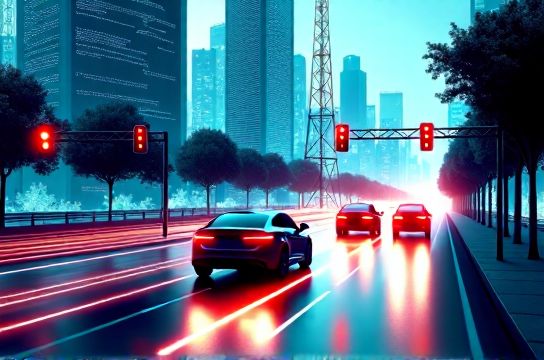
Let’s break it down. Traditional traffic systems rely on fixed timers and basic sensors. But with 5G-enabled vehicle-to-everything (V2X) communication, cars share data like speed, location, and braking status at lightning-fast speeds—up to 10 times faster than 4G. This means traffic lights can adapt in real time, emergency vehicles get green waves, and collisions drop significantly.
According to a recent study by Ericsson, cities using 5G-connected vehicles saw a 30% reduction in average commute times and up to 20% fewer accidents at intersections. That’s huge. And it’s not just big cities—pilot programs in Columbus, Ohio and Helsinki have proven success even in mid-sized urban areas.
One of the most powerful aspects? Real-time decision-making. Imagine your car getting a signal from a traffic light ahead, telling it exactly when the light will turn green. No more unnecessary stops. This tech, known as intelligent traffic management, uses edge computing and 5G to process data locally, reducing lag and boosting reliability.
How 5G Outperforms Older Networks in V2X
| Feature | 4G LTE | 5G |
|---|---|---|
| Latency | 30–50 ms | 1–10 ms |
| Data Speed | 100 Mbps | 1–10 Gbps |
| Connection Density | 10,000 devices/km² | 1 million devices/km² |
| Reliability | 90% | 99.999% |
See the difference? That ultra-low latency is critical when a self-driving car needs to react in milliseconds. Plus, with more devices connected per square kilometer, entire fleets of vehicles, traffic cams, and smart signs can stay in sync without network congestion.
Now, what about privacy and security? Valid concern. But modern V2X systems use encrypted digital certificates and anonymous IDs to protect user data. Your car talks to the network without revealing who you are. Cities like Singapore are already enforcing strict data policies to ensure public trust.
The future? Even smarter integration. Soon, your car might receive alerts about school zones during pickup hours or reroute you automatically during flash floods—all powered by real-time traffic analytics. BMW, Ford, and Qualcomm are already testing these systems in live environments.
In short, 5G isn’t just for faster videos—it’s reshaping urban life. If you care about cleaner air, shorter commutes, and safer streets, this is one upgrade worth watching closely.