Hydrogen Fuel Cell Cars Emerge as Long Haul Sustainable Solution
- 时间:
- 浏览:253
- 来源:OrientDeck
Let’s cut through the hype: battery-electric vehicles (BEVs) dominate city commutes—but for long-haul trucking, transit buses, and freight corridors, they hit real-world limits. Range anxiety? Not really—the bigger issues are refueling time (30–45 min for a full BEV charge vs. <5 min for hydrogen), payload penalty (batteries add 2–3 tons), and grid strain from megawatt-level charging.
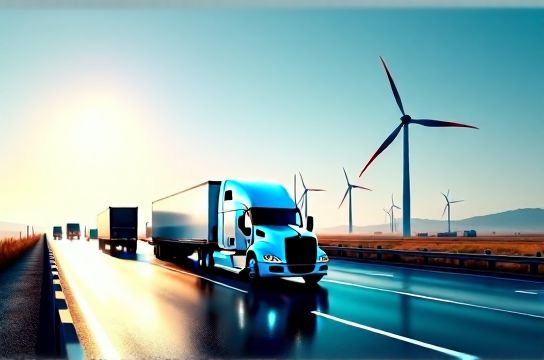
That’s where hydrogen fuel cell electric vehicles (FCEVs) shine—not as a ‘BEV alternative,’ but as a *complementary* zero-emission solution for heavy-duty, high-utilization applications.
According to the International Energy Agency (IEA), global FCEV truck deployments surged 142% YoY in 2023—reaching over 8,200 units—while hydrogen refueling stations grew to 1,027 worldwide (up 18% from 2022). In Europe, the EU’s ‘Hydrogen Backbone’ initiative targets 28,000 km of dedicated H₂ pipelines by 2030, with Germany alone deploying 100+ public H₂ stations by 2025.
Here’s how FCEVs compare head-to-head on key operational metrics:
| Parameter | FCEV Heavy-Duty Truck | Battery-Electric Truck | Diesel Truck |
|---|---|---|---|
| Range (km) | 800–1,000 | 300–450 (payload-dependent) | 1,200+ |
| Refuel/Recharge Time | <5 min | 90–180 min (fast-charging) | <10 min |
| Tank/ Battery Weight | ~120 kg (700-bar H₂) | 3,500–5,000 kg | ~80 kg (fuel) |
| Well-to-Wheel CO₂ (g/km) | 0–25 (green H₂) | 40–90 (EU grid avg.) | 650–800 |
Crucially, green hydrogen production costs have dropped 40% since 2020 (IRENA), now averaging $3.50–$4.50/kg—on track to hit $1.50/kg by 2030 with scale and electrolyzer innovation. When paired with renewable-powered compression and dispensing, FCEVs deliver true lifecycle decarbonization.
Yes—infrastructure lags. But unlike BEVs, which require massive grid upgrades *everywhere*, hydrogen can leverage existing gas corridor rights-of-way and repurposed pipelines. And here’s the kicker: a single 10 MW electrolyzer + refueling station can service 50+ trucks daily—far more efficient than installing dozens of 350-kW chargers across fragmented depots.
So if you’re evaluating sustainable mobility beyond urban light-duty use, don’t dismiss hydrogen. It’s not sci-fi—it’s already moving freight across California’s I-60, powering buses in Seoul, and scaling fast in China’s Yangtze Delta.
The future isn’t mono-technology. It’s smart segmentation—and hydrogen fuel cell cars are proving indispensable where batteries fall short.