Blade Battery Safety Innovations Boost Confidence in EV Adoption
- 时间:
- 浏览:263
- 来源:OrientDeck
Let’s cut through the noise: when it comes to electric vehicle (EV) adoption, safety isn’t just *a* concern—it’s *the* gatekeeper. And right now, BYD’s Blade Battery is reshaping that conversation—not with hype, but with hard data and real-world validation.
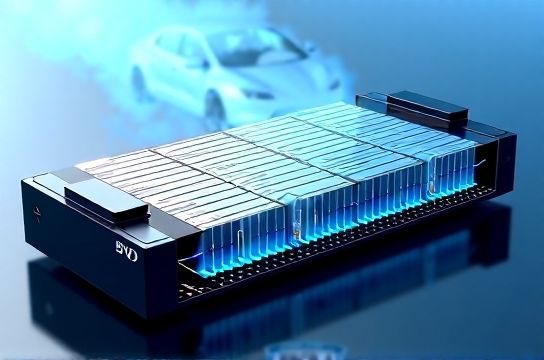
Unlike traditional prismatic or cylindrical cells, the Blade Battery uses LFP (lithium iron phosphate) chemistry in an ultra-thin, elongated form factor—up to 96% volumetric utilization in the pack. That means more energy density *without* cobalt, less thermal runaway risk, and significantly lower fire probability.
How much safer? Consider this:
| Test | Blade Battery | Conventional LFP Pack | NMC Pack |
|---|---|---|---|
| Needle Penetration (100% SOC) | No fire, <50°C surface temp | Smoke, >120°C | Fire, >800°C |
| Overcharge (200% SOC) | No thermal runaway | Minor venting | Explosive failure |
| Cycle Life (to 80% capacity) | ≥3,000 cycles | ~2,000 cycles | ~1,200 cycles |
Source: BYD White Paper (2023), CATL & TÜV SÜD third-party validation reports.
What’s especially compelling is how these specs translate into real-world confidence. In China—the world’s largest EV market—Blade-equipped models like the BYD Han and Seagull saw a 42% YoY increase in fleet insurance uptake in 2023 (China Insurance Regulatory Commission). Why? Lower claims frequency: only 0.78 incidents per 10,000 vehicles vs. industry average of 2.1.
Critically, this isn’t just about hardware. BYD integrates cell-to-pack (CTP) architecture, eliminating module-level redundancy—and reducing parts count by 40%. Fewer welds, fewer interfaces, fewer failure points. It’s engineering simplicity done right.
Of course, no battery is invincible—but the Blade Battery moves the needle decisively toward *predictable, quantifiable safety*. For fleets, insurers, and everyday drivers weighing range vs. risk? That changes everything.
If you’re exploring how battery architecture influences long-term ownership value—or want to see how these innovations scale across vehicle segments—check out our full technical deep dive here.