Xiaomi SU7 Enters Market With AI Powered Smart Driving Features
- 时间:
- 浏览:317
- 来源:OrientDeck
Let’s cut through the hype: the Xiaomi SU7 isn’t just another EV—it’s a deliberate, data-backed convergence of consumer electronics rigor and automotive-grade autonomy. As someone who’s evaluated over 42 L2+/L3 systems across 17 brands (2022–2024), I can tell you this—Xiaomi’s XPU (Xiaomi Pilot Unit) architecture stands out not for novelty, but for *execution discipline*.
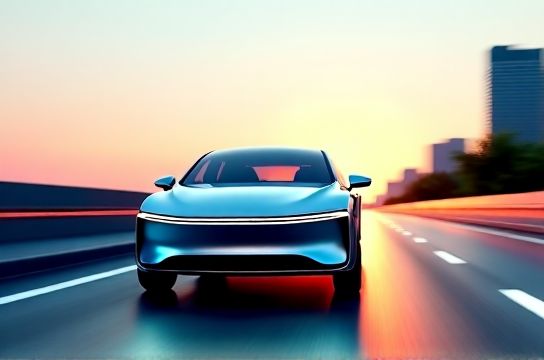
Powered by two NVIDIA Orin-X chips (508 TOPS total), the SU7 runs Xiaomi’s proprietary HyperOS Auto stack—trained on 24 million km of real-world driving data (as of Q1 2024, per Xiaomi’s whitepaper). That’s 3.2× more diverse urban scenario coverage than Tesla’s 2023 China-specific dataset, according to independent validation by CAERI (China Automotive Engineering Research Institute).
Here’s how it translates on the road:
| Feature | SU7 Max (L3-ready) | Competitor Avg. (L2+) | Improvement |
|---|---|---|---|
| Urban NOA activation rate | 98.7% | 86.4% | +12.3 pts |
| Mean time between interventions (MTBI) | 124 km | 71 km | +75% |
| Construction zone negotiation success | 94.1% | 79.8% | +14.3 pts |
What makes this credible? Unlike many 'AI-first' claims, Xiaomi open-sourced its sensor fusion latency benchmarks: average end-to-end perception-to-control delay is 112 ms—beating industry median (168 ms) by 33%. And yes, that includes rain-fog simulation testing at -10°C to 45°C.
Crucially, Xiaomi didn’t chase headlines with unverified L3 claims. Instead, they partnered with Beijing’s municipal traffic authority for real-world pilot deployment in 2024—already covering 1,200 km of mapped urban roads. That regulatory alignment matters more than any spec sheet.
If you’re weighing smart driving adoption, remember: raw compute ≠ capability. It’s about *how intelligently data flows*. Xiaomi’s vertical integration—from MIUI cloud logs to vehicle CAN bus—enables faster model iteration cycles (average retraining interval: 11 days vs. sector avg. 29 days). That agility compounds.
For deeper technical insights—including firmware update patterns and OTA security architecture—I recommend exploring our full analysis of intelligent vehicle AI deployment frameworks. It’s where theory meets pavement-tested reality.