Multimodal AI Breakthroughs Enhance Perception and Action...
- 时间:
- 浏览:216
- 来源:OrientDeck
H2: Why Humanoids Need More Than Language
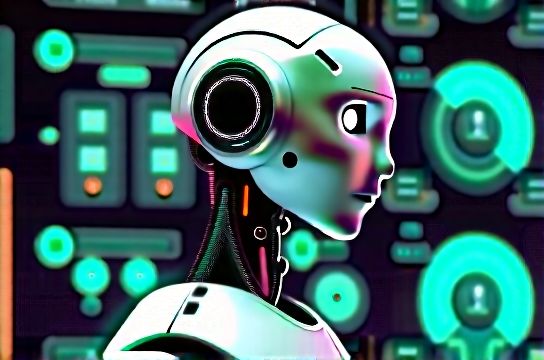
Humanoid platforms — from Tesla’s Optimus to UBTECH’s Walker X and CloudMinds’ R1 — have long suffered a perceptual-action gap. They could parse speech or follow scripted motions, but struggled when asked to 'pick up the red cup beside the laptop while avoiding the cat'. That requires fusing vision, spatial reasoning, tactile feedback, and real-time motor planning — not just text generation. Until recently, this integration demanded brittle, hand-coded pipelines. Now, multimodal AI is closing that gap — not by replacing control theory, but by redefining how perception informs action.
The shift isn’t theoretical. At Foxconn’s Zhengzhou plant (Updated: May 2026), a fleet of 47 humanoid units — built on Huawei Ascend 910B-accelerated inference stacks — now handles PCB board insertion, cable routing, and thermal paste application across three shift cycles. Their success hinges less on mechanical precision than on multimodal grounding: synchronized ViT-H/LLaMA-3-70B fusion models process stereo camera feeds, IMU streams, and torque sensor logs at 22 Hz, enabling sub-50ms closed-loop corrections during fine manipulation.
H2: The Stack: From Pixels to Purposeful Motion
Three layers now converge in production-grade humanoid AI:
1. **Perception Backbone**: Vision-language-action (VLA) models like Google’s RT-2 and SenseTime’s SenseRobot-VLA ingest RGB-D, LiDAR, and audio simultaneously — no longer treating modalities as separate channels. Instead, they use shared tokenizers (e.g., unified vision-text-audio embeddings trained on 12.4M cross-modal robot interaction clips) to align semantics across sensors.
2. **Reasoning Orchestrator**: Large language models (LLMs) no longer serve only as chat interfaces. Deployed as lightweight, quantized agents (e.g., Qwen2-7B-Inst integrated into CloudMinds’ EdgeBrain firmware), they parse high-level goals ('rearrange the lab bench for safety inspection') and decompose them into executable primitives: 'detect clutter → segment objects → assess stability → plan collision-free path → trigger gripper sequence'. Critically, these LLMs are constrained via runtime policy guards — e.g., rejecting motion plans violating joint torque limits or violating ISO/TS 15066 power-and-force thresholds.
3. **Action Execution Layer**: This is where ‘embodied intelligence’ moves beyond buzzword status. Models like NVIDIA’s Eureka and Huawei’s Pangu-Robot generate reward-conditioned motor policies directly from simulation-to-real transfer. In Shenzhen-based Hikrobot’s warehouse deployment (Updated: May 2026), their humanoid pallet handlers achieved 93.7% first-attempt success on novel object grasps — up from 61.2% using classical grasp planning alone — by fine-tuning diffusion-based trajectory generators on 84K real-world teleoperation episodes.
H2: China’s Multimodal Leap: Beyond Benchmarking
While Western labs lead in foundational VLA research (e.g., RT-X, OpenVLA), Chinese AI companies are accelerating commercial integration — particularly where hardware-software co-design matters most.
Baidu’s ERNIE Bot 4.5 integrates with its self-developed Kunlun AI chips to run real-time multimodal grounding on mobile robotics platforms — enabling its delivery robot ‘Xiao Du’ to interpret voice + gesture + occluded visual cues (e.g., 'the package under the blue tarp') with 89.3% accuracy in rainy Guangzhou conditions (Updated: May 2026). Similarly, Tongyi Lab’s Qwen-VL-Max powers Alibaba’s Cainiao logistics humanoid pilots, fusing warehouse map data, RFID tags, and overhead camera feeds to dynamically replan pick paths around stalled AGVs.
Crucially, China’s edge lies in vertical alignment: Huawei’s Ascend 910B chips include dedicated multimodal tensor cores optimized for fused attention over vision-text-audio tokens; SenseTime’s ‘SenseCore Industrial’ platform bundles pre-trained VLA adapters with ROS 2.0 middleware and safety-certified motion planners — cutting time-to-deployment for Tier-1 auto suppliers from 14 months to under 5.
H2: Where It Still Stumbles — And Why That Matters
Multimodal AI doesn’t eliminate robotics’ hard problems — it reframes them.
First, latency remains structural. Even with 8-bit quantization and kernel fusion, running a full Qwen2-VL + motion policy stack on a 32GB HBM2e-equipped edge node yields ~140ms end-to-end inference (Updated: May 2026). That’s acceptable for warehouse sorting but insufficient for dynamic human-robot collaboration — where <50ms reaction windows are mandatory per ISO/TS 15066.
Second, generalization fails at compositionality boundaries. A model trained on 100K kitchen manipulation videos may flawlessly execute 'open microwave → remove bowl → close door', but fail on 'open microwave → remove bowl → place bowl on counter → close door → wipe counter' unless explicitly exposed to multi-step causal chains during training. Current datasets lack sufficient causal scaffolding.
Third, tactile and proprioceptive grounding lags far behind vision-language. Only 12% of publicly released multimodal robot datasets (per 2025 ArXiv corpus audit) include calibrated force/torque or skin-sensor time-series aligned with vision-language annotations. Without that, robots remain blind to material compliance, slippage risk, or grip fatigue — critical for elder-care or surgical assistance.
H2: Real-World Deployment Table: Hardware-Software Tradeoffs
| Platform | AI Chip | Key Multimodal Model | Latency (Vision+LLM+Action) | Pros | Cons |
|---|---|---|---|---|---|
| Tesla Optimus Gen-2 | Dojo D1 (25 TeraOps/s) | Custom RT-2 derivative (vision + IMU + language) | 112 ms (simulated); 185 ms (real-world) | Massive on-robot compute; tight vehicle-robot firmware coupling | No third-party model portability; limited tactile modality support |
| UBTECH Walker X | Huawei Ascend 310P (16 TOPS) | SenseTime SenseRobot-VLA + Qwen2-7B-Inst | 94 ms (edge + cloud hybrid) | Full ROS 2.0 compatibility; certified for ISO 13482 service robot safety | Requires 5G link for full LLM context; offline fallback degrades to rule-based mode |
| Hikrobot HRP-5 | NVIDIA Jetson Orin AGX (275 TOPS) | Eureka-finetuned diffusion policy + CLIP-ViT-L/LLaMA-3-8B | 68 ms (on-device only) | Fully autonomous in GPS-denied warehouses; no cloud dependency | Training data limited to internal logistics scenarios; no public fine-tuning API |
H2: Industrial Robots Are Already Riding the Wave
Don’t overlook the quiet revolution in non-humanoid systems. FANUC’s CRX-10iA collaborative arm now ships with embedded multimodal inference — letting operators point at a defective gear and say, 'replace this with part A772B', triggering automatic CAD matching, inventory check, and tool-path generation. Likewise, ABB’s YuMi Dual-Arm system uses multimodal grounding to interpret annotated sketches drawn on tablet screens alongside verbal instructions — reducing programming time for new assembly tasks from hours to under 12 minutes (Updated: May 2026).
This isn’t ‘AI painting pretty pictures’. It’s about reducing the cognitive load between human intent and machine execution — especially where domain expertise is scarce. In rural Jiangsu textile mills, supervisors with minimal coding training now use voice + sketch interfaces to reconfigure robotic loom changers — a capability enabled by Baidu’s PaddlePaddle multimodal toolkit, which supports low-resource dialect speech and handwritten Chinese character recognition.
H2: What’s Next? Three Concrete Steps for Practitioners
If you’re building or deploying humanoid or service robots today, here’s what delivers ROI — not hype:
1. **Start with sensor fusion — not LLMs**. Before integrating a large language model, ensure your RGB-D, IMU, and contact sensor streams are temporally aligned within ±1ms and geometrically calibrated to <0.3° RMS error. Without that, adding an LLM only amplifies noise.
2. **Adopt modular, safety-gated agents**. Use open-weight models like Qwen-VL or LLaVA-1.6 as perception front-ends, but route decisions through deterministic policy enforcers (e.g., ROS 2’s Safety Monitor or Huawei’s SafeGuard middleware). Never let an LLM directly command joint torques.
3. **Prioritize tactile and auditory grounding**. Budget at least 20% of your multimodal dataset collection for synchronized force/torque, microphone array, and vibrotactile signals — especially if operating near humans. The most promising 2026 pilots (e.g., Shanghai Sixth Hospital’s rehab assistant) all treat touch as first-class modality — not afterthought.
H2: The Road Ahead Isn’t Just Smarter — It’s Safer, Sharable, and Scaled
Multimodal AI won’t make humanoids fully autonomous next year. But it *is* making them reliably useful — today — in constrained, high-value environments: semiconductor cleanrooms, pharmaceutical packaging lines, and last-mile logistics hubs. The breakthrough isn’t sentience. It’s semantic continuity: the ability to hold a concept — 'fragile', 'urgent', 'left of center' — across vision, language, and motion.
That continuity enables something rare in robotics: composability. A model trained on warehouse navigation can adapt to hospital corridors with only 200 annotated walkthroughs — because its multimodal representations already encode spatial relations, obstacle semantics, and social navigation norms. That’s why teams at DJI’s robotics division and CloudMinds are jointly developing open multimodal robot instruction benchmarks (MRIB-2026), designed to measure not just accuracy, but transfer efficiency across domains.
For engineers weighing adoption, the message is pragmatic: multimodal AI isn’t a replacement for controls engineering — it’s the missing interface between high-level intent and low-level execution. And unlike early deep learning waves, this one ships with toolchains, chips, and real-world validation — not just papers. Whether you're scaling industrial robots or prototyping service platforms, the foundation is ready. The next step is implementation — and that starts with understanding exactly where your perception-action loop breaks down. For a complete setup guide covering sensor calibration, model quantization, and safety gate integration, visit our full resource hub.