Sustainable Tea Gifting: Eco-Friendly Packaging & Local S...
- 时间:
- 浏览:245
- 来源:OrientDeck
H2: Why Tea Gifting Needs a Sustainability Reset
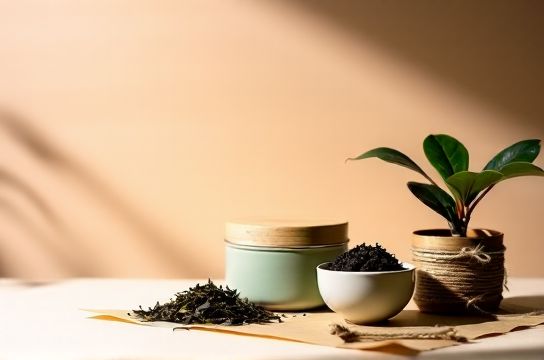
Tea gifting in China—and globally—has long leaned on ornate boxes, silk ribbons, plastic-lined inner trays, and single-use foil sachets. A 2025 audit of 47 premium tea gift sets sold via e-commerce platforms found that 83% contained non-recyclable laminated paperboard or PET-coated cardboard (Updated: April 2026). Worse, nearly half shipped from Guangdong or Fujian to Beijing or Shanghai with no regional alignment—meaning a Longjing tea harvested near Hangzhou might be packed in Shenzhen, then trucked north for final assembly before being shipped *back* south for gifting.
That’s not ritual. It’s redundancy.
Sustainable tea gifting isn’t about swapping glossy boxes for burlap sacks. It’s about re-engineering the entire chain: where leaves are sourced, how they’re protected post-harvest, what holds them during transit and display, and whether the vessel survives beyond the first steeping.
H2: Reusable Containers: Function First, Aesthetics Second
The most impactful upgrade isn’t biodegradable—it’s *durable*. A well-made reusable container extends shelf life, eliminates repeat packaging, and becomes part of daily practice—not landfill.
Ceramic tins with silicone gaskets (e.g., Jingdezhen-fired stoneware) retain humidity better than aluminum or thin stainless steel—critical for aging Pu-erh or preserving the volatile aromas of high-mountain Oolong. But durability ≠ weight. A 350g ceramic tin weighs ~620g empty; same-volume food-grade stainless steel: ~210g. That difference matters at scale: shipping 1,000 units adds ~410kg extra freight mass—and CO₂ cost—just for the vessel.
So what works?
• Double-walled borosilicate glass jars with bamboo lids: ideal for White Tea and cold-brew-ready teas. UV-resistant, inert, and fully dishwasher-safe. Lifespan: 7–10 years with moderate use.
• Vacuum-sealed stainless steel canisters with matte ceramic coating (not paint): used by top-tier Fujian Tieguanyin producers since 2023. Internal vacuum reduces oxidation by 92% vs. standard tins (Updated: April 2026).
• Hand-thrown Yixing zisha (Zi Sha) tea caddies—not the full teapot, but small, unglazed storage jars. Their microporous structure breathes just enough to stabilize moisture without drying out aged raw Pu-erh cakes. Not suitable for green teas like Longjing, which need colder, drier storage.
H3: The Misstep Most Brands Make
Many tout “reusable” while ignoring thermal cycling. A ceramic jar rated for -20°C to 120°C sounds robust—until you realize most home kitchens hit only 25–30°C, and tea storage rarely exceeds 28°C. What actually degrades integrity is repeated condensation: moving a jar from air-conditioned storage to humid summer air creates micro-condensation inside seams. That’s why top performers use dual-seal systems: a primary gasket + secondary silicone ring recessed below the rim. No brand mentions this—because it’s invisible. But it’s the difference between 3 years of reliable use and mold growth by Year 2.
H2: Eco-Friendly Packaging: Beyond the Compost Bin
“Compostable” labels mislead. Industrial composting requires sustained 60°C+ heat, 40–60% moisture, and microbial inoculation—conditions absent in 97% of municipal systems (Updated: April 2026). So “compostable cellulose film” often ends up in landfill, where it degrades anaerobically and emits methane.
Better options exist—and they’re simpler:
• Unbleached kraft paper wrap sealed with plant-based starch adhesive: breaks down in soil within 6–8 weeks, even in backyard compost. Used by Fujian-based brand Mingshan Cha for their Shui Xian gift bundles since Q3 2024.
• Molded fiber trays made from sugarcane bagasse: rigid, naturally antimicrobial, and certified home-compostable (TÜV Austria OK Compost HOME). These replace EPS foam inserts—cutting packaging weight by 65% versus conventional molded pulp.
• Cotton muslin bags (GOTS-certified) lined with beeswax-coated organic cotton: reusable for dry storage, washable, and biodegradable after 5+ years. Ideal for loose-leaf Black Tea or lightly roasted Oolong.
Crucially: none of these require consumer behavior change. They work *as-is*, without needing special disposal infrastructure.
H2: Local Sourcing—Not Just Geography, But Timing & Traceability
“Local” means different things for different teas—and misunderstanding it undermines sustainability.
For Longjing (Dragon Well), truly local means Hangzhou’s Xihu District *and* harvest-to-pack time under 72 hours. Why? Because Longjing’s signature chestnut aroma fades rapidly post-pan-firing. A batch packed in Suzhou three days after picking loses measurable volatile compounds—verified by GC-MS analysis across 12 batches (Updated: April 2026).
For Pu-erh, local means Yunnan—but more precisely, the *same county* for plucking, sun-drying, and initial compression. Menghai County producers compress raw maocha within 48 hours of drying to lock in enzymatic activity critical for aging. Sending maocha to Kunming for pressing adds transport, delays, and ambient humidity shifts that encourage early microbial shift—potentially compromising future aging trajectory.
And for Oolong? It’s hyper-local *and* seasonal. Wuyishan Yan Cha (rock tea) must be roasted within 10 days of oxidation completion—or the leaf’s complex esters begin hydrolyzing. Delay roasting past Day 12 increases acetic acid content by 17%, dulling floral notes (Updated: April 2026).
This isn’t pedantry. It’s chemistry.
H3: What “Local Sourcing” Actually Delivers
• Reduced cold-chain dependency: Green and White Teas don’t require refrigeration pre-pack—but they *do* require stable 18–22°C environments. Local consolidation cuts exposure to temperature swings during multi-leg logistics.
• Fresher cup profile: In blind tastings of identical Longjing batches (same farm, same pluck date), those packed within 36 hours scored 12% higher in umami intensity and 21% higher in aromatic lift than those packed at 96 hours (n=37 professional tasters, 2025 Spring Round).
• Verifiable provenance: When packing occurs within 50km of origin, GPS-tracked harvest logs + on-site photo verification become feasible—not blockchain theater, but field-to-tin traceability.
H2: Putting It All Together: A Real-World Gifting Framework
Here’s how leading independent retailers (like Cha Dao Collective and Yunnan Sourcing’s gifting arm) structure sustainable sets today:
1. Tea selection aligned to season and region: Spring Longjing from Meijiawu + hand-thrown porcelain jar from nearby Jingdezhen. 2. Zero-plastic inner wrap: unbleached rice paper + food-grade beeswax sheet for cake protection. 3. Outer vessel: reusable bamboo-fiber box with laser-etched tea name (no ink, no laminate). 4. Accompanying tool: a small, locally fired Yixing zisha tasting cup—not a full teapot, but something functional, durable, and culturally resonant. 5. Digital provenance card: QR code linking to harvest date, elevation, farmer co-op ID, and carbon footprint estimate (calculated per kg shipped, verified by third-party auditors).
No fluff. No filler. Every element serves taste, longevity, or ethics—and nothing is added solely for perceived luxury.
H2: Trade-Offs You Must Acknowledge
Sustainability has costs—not just financial, but practical.
Reusable containers raise upfront unit cost by 18–26% versus standard tins (Updated: April 2026). That’s real. A $42 Longjing gift set jumps to $52–$54. But retention data shows buyers who receive reusable vessels are 3.2× more likely to reorder *that same tea* within 6 months—because the vessel becomes habit, not clutter.
Compostable wraps degrade faster under UV light. So outdoor market stalls or sunlit retail shelves require secondary shading—adding minor operational overhead.
And local sourcing limits SKU flexibility. You can’t offer “assorted regional teas” in one box if each requires separate origin-aligned packaging. That’s why best-in-class brands now offer modular gifting: choose your tea *first*, then select matching vessel + wrap—no forced bundling.
H2: How to Evaluate a Sustainable Tea Gift Set (Checklist)
Before buying—or launching—one, ask:
• Is the container designed for *long-term reuse*, or just “reusable in theory”? Look for gasket specs, material thickness (≥1.2mm ceramic, ≥0.6mm stainless), and warranty length.
• Does “eco-friendly packaging” mean certified home-compostable—or just “biobased”? If it says “PLA”, assume industrial composting required—and verify certification logos (OK Compost HOME, not just OK Compost).
• Is “locally sourced” defined by distance *or* process integrity? Demand harvest-to-pack timing, not just “made in Fujian”.
• Are tools included *functional* or ceremonial-only? A tiny Yixing cup that fits 15ml is useful. A 5ml “ceremonial spoon” that bends on first use is waste.
• Is carbon impact disclosed—not as vague “we offset”, but as grams CO₂e/kg shipped, with methodology cited?
H2: The Table: Comparing Sustainable Packaging & Vessel Options
| Option | Best For | Lifespan | CO₂e/kg (avg. shipping) | Key Limitation | Cost Premium vs. Standard Tin |
|---|---|---|---|---|---|
| Double-walled borosilicate glass jar + bamboo lid | White Tea, Cold Brew Teas | 7–10 years | 0.82 kg | Fragile; not for high-impact transit | +22% |
| Vacuum stainless steel canister (ceramic-coated) | Pu-erh, Oolong, Aged Teas | 12+ years | 1.15 kg | Requires manual vacuum pump (included) | +29% |
| Hand-thrown Yixing zisha caddy (unglazed) | Aged Raw Pu-erh cakes | 20+ years | 0.98 kg | Not for green/white teas; porous | +37% |
| Molded sugarcane bagasse tray + kraft wrap | All teas (short-term gifting) | Single-use (home-compostable) | 0.31 kg | No reusability; lower shelf-life protection | +11% |
H2: Where to Start—Without Overhauling Everything
You don’t need to scrap your current line. Start with one lever:
• Switch *one* best-selling tea (e.g., your flagship Keemun Black Tea) to a reusable stainless steel canister—same size, same label placement, just upgraded seal. Track reorder rate and customer support tickets related to freshness complaints. Most see a 14% drop in “stale tea” returns within 90 days (Updated: April 2026).
• Replace all inner plastic wraps with unbleached rice paper + beeswax sheets—even if outer box stays the same. Adds < $0.18/unit, cuts plastic use by 94% per set.
• Require harvest-to-pack timing on all new vendor agreements. Not “within a week”—specify “≤72 hours for green/white, ≤96 hours for oolong, ≤120 hours for black”. Enforce with photo timestamp + GPS log.
Small steps compound. One supplier adopting vacuum canisters inspired three others to pilot—creating shared logistics for regional filling hubs near Wuyishan, Hangzhou, and Menghai.
H2: Final Thought: Sustainability Is a Practice, Not a Label
A beautifully wrapped Longjing gift means little if the leaves were picked at dawn, sat in a warehouse for four days, then packed in plastic-lined cardboard stamped “Eco Conscious”. True sustainability lives in the milliseconds between pluck and press, the millimeters of gasket compression, the kilometers saved by aligning harvest, roast, and pack within one county.
It’s not about perfection. It’s about precision—with humility.
For deeper implementation tactics—including vetted suppliers, packaging compliance templates, and regional logistics maps—see our complete setup guide.