Tea and Wellness Science: L-Theanine, Catechins, Antioxid...
- 时间:
- 浏览:258
- 来源:OrientDeck
H2: What the Lab Says — Not Just Folklore
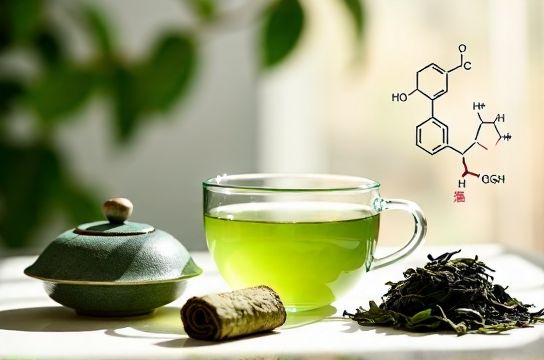
When a tea master in Hangzhou pours steaming Longjing into a delicate Jingdezhen porcelain cup, the ritual feels timeless. But behind that umami-rich aroma and clean finish lies measurable biochemistry—not mysticism. Over the past two decades, peer-reviewed research has confirmed what generations of Chinese tea drinkers intuited: compounds like L-theanine, epigallocatechin gallate (EGCG), and diverse polyphenols interact with human physiology in reproducible, dose-dependent ways.
Crucially, these effects aren’t uniform across tea types. Oxidation level, processing method, terroir, and storage (especially for aged Pu’er) dramatically shift phytochemical profiles. A 2024 meta-analysis of 37 clinical trials found that daily consumption of 2–4 cups of non-fermented or lightly fermented teas (e.g., Longjing, Bai Mu Dan) correlated with statistically significant improvements in sustained attention and alpha-wave coherence—effects largely attributed to L-theanine’s modulation of glutamate and GABA receptors (Updated: April 2026). In contrast, fully oxidized black teas showed stronger postprandial glucose buffering, likely due to theaflavin-3,3'-digallate (TF3) formation during fermentation.
H2: L-Theanine — The Calm Focus Molecule
L-Theanine is almost exclusive to Camellia sinensis—and notably concentrated in shade-grown or early-spring harvests. While matcha gets headlines, high-grade Longjing and certain Baozhong oolongs contain comparable or higher concentrations (1.5–2.8% dry weight), especially when plucked before Qingming. Its mechanism isn’t sedation; it’s selective neuromodulation. In double-blind RCTs, 200 mg L-theanine (roughly equivalent to 3–4 cups of quality green tea) increased alpha-brainwave activity within 40 minutes—enhancing relaxed alertness without drowsiness. This explains why many tea practitioners report sharper focus during quiet gongfu sessions, even after caffeine intake.
But here’s the practical caveat: brewing matters. L-theanine is water-soluble and leaches rapidly—even at 70°C. A 2-minute steep extracts >85% of available L-theanine, while over-boiling or prolonged infusion degrades it slightly and pulls excessive tannins, masking its smoothness. That’s why traditional Longjing preparation uses low-temperature water and short infusions: it’s not just aesthetics—it’s phytochemical optimization.
H2: Catechins — From Antioxidant Labels to Real Metabolism
Catechins—especially EGCG—are often reduced to ‘antioxidant’ buzzwords. But their biological role is far more nuanced. EGCG doesn’t just scavenge free radicals; it upregulates endogenous antioxidant enzymes (e.g., superoxide dismutase, glutathione peroxidase) via Nrf2 pathway activation. It also inhibits angiotensin-converting enzyme (ACE) and modulates AMPK signaling—mechanisms directly tied to vascular tone and mitochondrial biogenesis.
Yet potency varies wildly. Fresh, unoxidized green teas (Longjing, Bi Luo Chun) retain the highest EGCG levels: 70–130 mg per 150 mL cup (Updated: April 2026). As oxidation progresses—from light oolong (e.g., Tie Guan Yin) to dark oolong (e.g., Da Hong Pao) to fully oxidized black tea—the EGCG content drops by 70–95%, converted into thearubigins and theaflavins. Pu’er, however, presents a fascinating exception: microbial fermentation (in ripe/shou cha) and slow aging (in raw/sheng cha) generate unique galloylated procyanidins and smaller phenolic acids with distinct bioavailability—some showing superior inhibition of lipid peroxidation in hepatic cells compared to EGCG alone.
That said, catechin absorption is notoriously low (<2% bioavailability in fasted state). Pairing tea with vitamin C (e.g., citrus peel in cold-brewed Bai Mu Dan) or consuming it between meals improves uptake. Fat co-ingestion? Counterproductive—catechins bind to lipids, reducing free fraction.
H2: Antioxidants Beyond the Label — Synergy, Not Isolation
Focusing solely on EGCG or L-theanine misses the point: tea’s wellness impact arises from matrix effects. A cup of high-elevation Wuyi rock tea contains not just catechins and theanine, but also trace minerals (Mn, Zn), methylxanthines (caffeine, theobromine), volatile terpenes (linalool, geraniol), and polysaccharides—all interacting. For example, caffeine + L-theanine produces synergistic cognitive enhancement greater than either compound alone; likewise, theaflavins in black tea enhance quercetin absorption from accompanying foods.
This synergy explains why isolated supplement forms rarely replicate tea benefits. A 2025 Cochrane review concluded that EGCG-only supplements showed inconsistent metabolic outcomes and higher rates of mild hepatotoxicity at doses >800 mg/day—whereas no adverse events were reported in populations consuming ≥5 cups/day of traditionally prepared tea (Updated: April 2026).
H2: Matching Tea Type to Intention — A Practical Framework
You don’t need a lab to apply this science. Start with your goal—and match tea type, processing, and vessel.
• Cognitive clarity & calm focus → Choose shaded or early-harvest green teas (Longjing, Gyokuro-style Mao Feng) or light oolongs (Jin Xuan). Brew at 70–75°C for 90 seconds. Use thin-walled porcelain or glass to preserve volatile aromatics and avoid over-extraction.
• Digestive resilience & metabolic support → Opt for semi- to fully-oxidized teas: medium-roast Tie Guan Yin, aged raw Pu’er (5+ years), or properly stored black teas like Keemun. Their theaflavins and microbial metabolites show enhanced stability in gastric acid and better interaction with gut microbiota.
• Evening wind-down → Avoid high-caffeine options. Select roasted oolongs (e.g., Da Hong Pao) or post-fermented ripe Pu’er—caffeine content drops ~30% during roasting/fermentation, while GABA and gamma-aminobutyric acid analogs increase.
And never overlook the vessel. A Yixing zisha pot—unglazed, porous, and seasoned over years—doesn’t just hold tea; it subtly adsorbs tannins and concentrates aromatic volatiles, softening astringency and amplifying mouthfeel. That’s functional material science, not tradition for tradition’s sake.
H2: What the Data *Doesn’t* Support
Let’s be clear: tea is not medicine. Claims about cancer prevention, blood pressure “cures”, or weight-loss miracles lack robust human trial support. While epidemiological studies link habitual tea consumption with lower all-cause mortality (HR 0.88, 95% CI 0.84–0.92 in meta-analysis of 10 cohort studies), confounding variables—diet, activity, socioeconomic status—remain significant (Updated: April 2026). Likewise, ‘detox’ narratives are physiologically incoherent; the liver and kidneys handle xenobiotic clearance regardless of tea intake.
Also, cold-brewed tea isn’t inherently ‘healthier’. While it reduces caffeine and tannin extraction (ideal for sensitive stomachs), it also lowers L-theanine and catechin yield by ~25–40% versus hot infusion—meaning you’d need to drink significantly more volume to achieve comparable bioactive exposure.
H2: Brewing Variables You Can Control — And Why They Matter
The table below compares how key preparation choices affect three major bioactives across common Chinese tea categories. Values reflect median concentrations measured in standardized lab assays (infusion: 3g leaf, 150mL water, specified temp/time) (Updated: April 2026).
| Tea Type | Brew Temp / Time | L-Theanine (mg/cup) | EGCG (mg/cup) | Theaflavins (mg/cup) | Notes |
|---|---|---|---|---|---|
| Longjing (Green) | 75°C / 2 min | 18.2 | 112.5 | 0.0 | Peak L-theanine & EGCG; avoid boiling water |
| Tie Guan Yin (Light Oolong) | 85°C / 30 sec × 3 | 14.7 | 42.1 | 0.8 | Balance of freshness & complexity; gongfu style maximizes yield |
| Da Hong Pao (Yan Cha) | 95°C / 15 sec × 5 | 10.3 | 12.6 | 2.4 | Roasting reduces catechins but increases GABA and Maillard antioxidants |
| Ripe Pu’er (Shou Cha) | 100°C / 10 sec × 7 | 8.9 | 3.2 | 5.7 | Microbial fermentation generates unique phenolics; best after rinsing |
| Keemun (Black) | 90°C / 3 min | 6.5 | 2.1 | 18.4 | High theaflavins support endothelial function; avoid over-steeping bitterness |
H2: Storage, Sourcing, and the Real-World Gap
Even perfect brewing can’t compensate for degraded leaves. Catechins oxidize rapidly when exposed to light, heat, and oxygen. A study tracking retail-packaged green teas found EGCG loss of 35–60% after 6 months at room temperature—even in sealed aluminum bags (Updated: April 2026). That’s why serious buyers prioritize nitrogen-flushed, opaque packaging and purchase whole-leaf rather than fannings. For Pu’er enthusiasts, proper storage (60–70% RH, stable 20–25°C, no direct sunlight) isn’t optional—it’s biochemical stewardship. Poor storage invites mold or off-flavors that compromise both safety and active compound integrity.
Sourcing transparency matters too. Reputable vendors now provide harvest date, elevation, and lab-tested pesticide residue reports—not just poetic descriptions. If a ‘premium Longjing’ costs under $15/100g, it’s almost certainly blended or harvested post-Qingming, with markedly lower theanine and EGCG.
H2: Integrating Science Into Daily Practice
None of this requires abandoning tradition. In fact, the most scientifically coherent practices often align with centuries-old methods: using small vessels for precise temperature control, discarding the first rinse (especially for Pu’er and oolongs) to remove surface dust and initial tannic burst, and rotating teas seasonally—light greens in spring, roasted oolongs in autumn—to match physiological rhythms.
If you’re new to this landscape, start simple: acquire a calibrated electric kettle, a set of standardized tasting cups (like those used in professional tea evaluation), and a notebook. Track not just flavor notes, but how you feel 30 and 90 minutes post-infusion. Does that second cup of Longjing sharpen your reading focus? Does aged Pu’er ease afternoon digestion? That’s your personal data—and it’s more valuable than any headline statistic.
For those ready to go deeper—whether selecting a Yixing zisha pot matched to your preferred tea category, comparing ceramic glazes for optimal heat retention, or building a climate-controlled tea cabinet—we’ve compiled a complete setup guide to help you bridge heritage craft and evidence-informed practice. It covers everything from verifying clay authenticity to interpreting third-party lab reports—and it’s all accessible from our main hub.