Seasonal Tea Pairing Guide: Spring Greens to Winter Reds
- 时间:
- 浏览:179
- 来源:OrientDeck
H2: Why Seasonality Matters in Chinese Tea
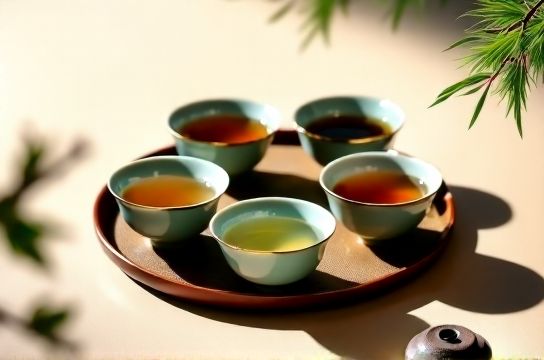
Tea isn’t just about leaf grade or origin—it’s a dialogue between plant, weather, and human rhythm. In China’s tea-growing regions—from Hangzhou’s misty hills to Fujian’s rocky cliffs—seasonal shifts directly impact amino acid content, polyphenol balance, and volatile oil expression. A spring Longjing harvested before Qingming (early April) contains up to 4.2% theanine (Updated: April 2026), yielding its signature umami sweetness; by late May, that drops to ~2.7%, and bitterness rises. Summer whites lose delicate floral notes under intense UV exposure, while autumn oolongs develop richer stone-fruit depth from cooler nights and slower oxidation. Ignoring seasonality means drinking tea out of sync—not just with flavor, but with physiology. Your body craves cooling, hydrating infusions in summer; it seeks warmth, digestion support, and iron bioavailability in winter. This guide maps those needs to real teas, real vessels, and real habits.
H2: Spring Greens — Freshness as Ritual
Spring is the season of renewal—and for Chinese tea, it’s dominated by unoxidized greens: Longjing tea, Bi Luo Chun, and early-season Mao Feng. These teas are pan-fired or steamed within hours of plucking to lock in chlorophyll, vitamin C, and volatile terpenes like geraniol and linalool. Their optimal window is narrow: best consumed within 3–4 months of harvest (refrigerated, sealed, away from light). Brew them at 75–80°C, 1–2 minutes, in thin-walled vessels that won’t overheat delicate leaves.
For daily practice, a 120ml Jingdezhen porcelain gaiwan offers control and clarity—no residual flavors, no thermal shock. For gifting or ceremonial use, a hand-thrown ceramic tea set with bamboo accents reinforces the quiet elegance of spring. Avoid unglazed clay here: Yixing zisha absorbs green tea’s subtle aromas and can impart earthiness. If you’re exploring cold brew, spring greens work surprisingly well—steep 3g per 300ml chilled water for 4–6 hours in glass; the result is sweet, low-tannin, and vibrantly vegetal. Just don’t store cold-brewed tea beyond 24 hours—it oxidizes rapidly once extracted.
H2: Summer Whites — Lightness Without Compromise
White tea—Bai Mu Dan, Shou Mei, Silver Needle—is minimally processed: withered in ambient air, then dried. Its charm lies in subtlety: floral top notes, honeyed mid-palate, and a clean finish. But summer heat accelerates enzymatic activity—even in dried leaves. That’s why high-grade Silver Needle (single buds, Fuding origin) should be stored below 20°C and <50% RH (Updated: April 2026). Once opened, use within 6 months.
Cold brewing is ideal here—not just for convenience, but chemistry. At room temperature or chilled, white tea extracts fewer catechins and more polysaccharides, yielding smoother, silkier texture. Use a double-walled glass pitcher or a food-grade PET cold brew carafe. Skip the metal infuser basket; fine white hairs clog it. Instead, opt for a loose-leaf silicone mesh bag or simply decant after steeping.
Teaware-wise, summer calls for breathability and visual calm. A shallow, wide-rimmed Jian Zhan (especially a modern iron-glazed variant with subtle hare’s fur) enhances mouthfeel without overpowering. Or go minimalist: a matte-finish ceramic tea bowl from a small-batch studio in Jingdezhen—its weight and thermal mass keep infusion cool longer. Avoid heavy stoneware or thick porcelain: they retain too much heat, muddying white tea’s delicacy.
H2: Autumn Oolongs — Depth Through Transition
Autumn oolong tea—Tie Guan Yin, Da Hong Pao, Phoenix Dan Cong—thrives on diurnal swing. Cooler nights slow photosynthesis, concentrating sugars and aromatic esters. Unlike spring oolongs (lighter, greener), autumn versions undergo slightly heavier roasting or longer oxidation (30–60%), delivering baked apple, osmanthus, or roasted chestnut notes. They’re more stable than greens or whites: shelf life extends to 18 months if vacuum-sealed and stored in cool darkness (Updated: April 2026).
This is where Yixing zisha earns its reputation. A medium-fired, semi-porous purple clay pot—ideally aged 2–3 years and dedicated solely to one oolong type—builds seasoning that rounds tannins and amplifies roasted depth. Choose a 150–180ml capacity with a short, wide spout for even pouring. Never wash with soap; rinse only, air-dry upside-down. And never mix oolong types in one pot: Dan Cong’s floral volatility clashes with Da Hong Pao’s mineral intensity.
For beginners, a dual-chamber glass teapot works well—observe leaf unfurling, control steep time precisely, and avoid clay commitment. But if you’re building a serious collection, invest in a single-region Yixing pot first. It’s not about prestige—it’s about functional fidelity.
H2: Winter Reds — Warmth, Body, and Resilience
Black tea—called hong cha (red tea) in Chinese—undergoes full oxidation, converting catechins into theaflavins and thearubigins. This delivers robust body, natural sweetness, and digestive benefits—ideal when ambient humidity drops and metabolic rate slows. Keemun, Lapsang Souchong, and high-elevation Jin Jun Mei all shine in winter. Unlike greens or whites, red teas gain complexity with age: properly stored Jin Jun Mei (in nitrogen-flushed tins, 10–15°C) develops dried fruit and cedar notes after 2–3 years (Updated: April 2026).
Winter demands thermal retention. A thick-walled Yixing red clay pot (zhu ni) or a glazed stoneware teapot from a Shandong kiln excels here—both hold heat for 8+ minutes during multi-steep sessions. For milk-based preparations (e.g., traditional Fujian-style red tea with local goat milk), pre-warm the vessel with boiling water first—cold clay shocks the infusion.
If you prefer Western-style brewing (one long steep), use a stainless steel or borosilicate glass French press—but skip paper filters. They trap essential oils. Instead, decant fully after 4 minutes. And always store red teas away from spices, coffee, or strong-smelling pantry items: their porous leaves readily absorb ambient odors.
H2: Matching Teaware to Season & Style
Choosing the right vessel isn’t aesthetic preference—it’s thermodynamic alignment. The table below compares five core teaware types across key performance dimensions for seasonal use:
| Teaware Type | Ideal Tea Category | Thermal Retention (min) | Flavor Neutrality | Maintenance Effort | Best For |
|---|---|---|---|---|---|
| Jingdezhen Porcelain Gaiwan | Spring Greens, Summer Whites | 3–4 | High (non-porous) | Low (dishwasher-safe) | Learning, tasting, cold brew prep |
| Yixing Zisha (Purple Clay) | Autumn Oolongs, Aged Pu-erh | 8–12 | Medium (seasons over time) | High (rinse-only, no soap) | Deep appreciation, repeated steeping |
| Jian Zhan (Iron Glaze Bowl) | Summer Whites, Light Oolongs | 5–7 | Medium-High (glaze seals clay) | Medium (avoid abrasive scrubbing) | Chawan-style sipping, texture focus |
| Glazed Stoneware Teapot | Winter Reds, Smoked Teas | 10–14 | High (fully vitrified) | Low (dishwasher-safe) | Cold climates, milk infusions, family use |
| Borosilicate Glass Teapot | All seasons (visual emphasis) | 4–6 | High | Low | Demonstration, gift sets, variable leaf size |
H2: Beyond the Leaf — Storage, Sourcing, and Sensibility
No seasonal pairing holds up without sound storage. Here’s what works—and what doesn’t:
• Vacuum sealing alone fails for long-term green/white storage: residual oxygen still degrades aroma. Nitrogen-flushed tins (used by reputable brands like Yunnan Sourcing and Seven Cups) reduce oxidation by 92% versus standard foil pouches (Updated: April 2026).
• Pu-erh tea is the exception: raw (sheng) cakes benefit from controlled ambient aging—think 60–65% RH, 20–25°C, dark, odor-free space. Compressed ripe (shou) pu-erh prefers drier conditions (50–55% RH) to prevent mold.
• When buying online, prioritize vendors who list harvest date, cultivar, and elevation—not just ‘premium’ or ‘artisan’. Look for batch codes traceable to specific mountains (e.g., Wuyi’s San Hua Yan or Anxi’s Tie Guan Yin core zone). Avoid ‘blended’ oolongs unless explicitly labeled; many budget offerings mix autumn leaves with filler stems to inflate volume.
For newcomers, start with a curated tea sampler—ideally one paired with a minimal tea set (gaiwan + fairness pitcher + 3 tasting cups). It’s the fastest path to calibrated taste memory. For seasoned drinkers, rotate your Yixing pots seasonally: dedicate one to spring greens (rare, but possible with strict rinsing), another to oolongs, and a third to aged pu-erh. Never force a pot into a role it wasn’t shaped for.
H2: The Human Element — Tea as Practice, Not Performance
Tea culture isn’t about perfection. It’s about noticing: how the steam curls off a freshly poured gaiwan, how the same Longjing tastes brighter after rain, how your throat feels after three steepings of roasted Tie Guan Yin on a crisp October afternoon. That’s the heart of tea art—not choreographed ritual, but attuned presence.
So if your ‘complete setup guide’ feels overwhelming, begin with one vessel, one tea, and one season. Master the rhythm of water temperature, leaf-to-water ratio, and rest time between infusions. Then expand—not to impress, but to understand.
Whether you’re sourcing your first Yixing zisha pot or comparing cold brew parameters across white tea grades, this approach grounds every decision in experience, not aesthetics alone. Because great tea isn’t found in catalogs—it’s coaxed from leaf, season, and attention.