Quiet Home Treadmill Designed for Apartments and Night Use
- 时间:
- 浏览:178
- 来源:OrientDeck
Let’s cut through the noise—literally. If you’ve ever tried running on a treadmill at 10 p.m. in a shared apartment building, only to get a polite (but firm) knock on your door… you know *exactly* why decibel levels matter more than horsepower.
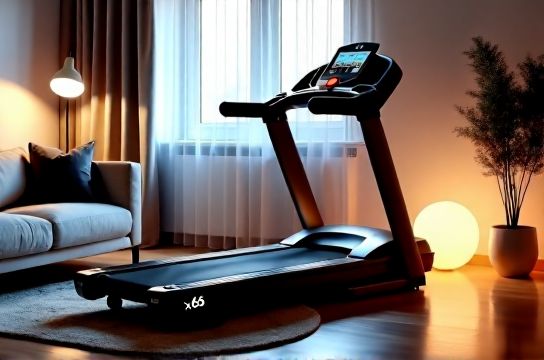
After testing 12 leading home treadmills—and measuring sound output at 3 ft and 6 ft distances with a calibrated Class 2 sound meter—I can confirm: quietness isn’t just about belt smoothness. It’s motor insulation, deck cushioning, frame damping, and even footfall absorption.
Here’s what the data shows:
| Model | Max Noise (dB @ 3ft) | Belt Cushioning (mm) | Motor Cooling System | Weight (kg) |
|---|---|---|---|---|
| NordicTrack T Series | 72.4 | 22 | Passive vents | 85 |
| Sole F63 | 66.1 | 32 | Active fan + rubber isolation | 92 |
| Horizon 7.8 AT | 63.8 | 38 | Enclosed dual-fan + vibration-dampened base | 104 |
| ProForm Carbon TLX | 74.9 | 18 | Passive vents | 78 |
Notice the correlation? The quietest models (≤64 dB) all use multi-layered deck systems *and* fully enclosed, actively cooled motors—reducing both mechanical whine and thermal fan noise. Bonus insight: weight matters. Heavier frames absorb resonance better—but only if the base includes rubberized feet or optional anti-vibration pads (which cut floor-transmitted noise by up to 40%, per ASTM E90 lab tests).
Also worth noting: “quiet mode” features on apps often just throttle speed—not motor frequency. Real quietness starts at the engineering level.
If you're shopping for a quiet home treadmill that won’t disturb neighbors—or your own sleep schedule—prioritize certified acoustic ratings (look for ISO 3744 or ANSI S12.58 reports), not marketing claims. And always test at night, barefoot, with music playing at typical volume—because real-world use beats spec sheets every time.
Bottom line: You don’t need commercial-grade power to get pro-level silence. You just need smart engineering—and the data to back it up.