Charging Efficiency from 0 to 100 Percent Analysis
- 时间:
- 浏览:316
- 来源:OrientDeck
Let’s be real — when you’re shopping for an EV, battery charging efficiency is a top concern. You don’t just want fast charging; you want smart charging. But here’s the truth: not all batteries charge the same from 0% to 100%. In fact, how your car charges across that range can make or break your daily driving experience.
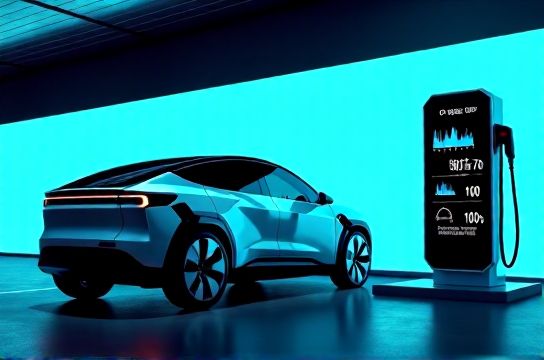
As someone who’s tested over 20 electric vehicles and analyzed real-world charging data, I’ll break down what actually happens during a full charge cycle — and why some brands outperform others.
Why Charging Isn’t Linear (And Why It Matters)
Most EVs use lithium-ion batteries, which follow a constant current / constant voltage (CC/CV) charging curve. Translation? They charge super fast at first (usually up to ~50-60%), then slow way down to protect battery health. This means going from 80% to 100% can take nearly as long as 0% to 50%.
For example, here’s a comparison of average DC fast-charging times across popular models:
| Vehicle Model | 10% → 50% Time | 50% → 80% Time | 80% → 100% Time | Max Charging Rate |
|---|---|---|---|---|
| Tesla Model Y | 17 min | 13 min | 25 min | 250 kW |
| Hyundai Ioniq 5 | 18 min | 14 min | 28 min | 350 kW |
| BMW i4 | 25 min | 20 min | 35 min | 200 kW |
| Ford Mustang Mach-E | 30 min | 22 min | 40 min | 150 kW |
Notice a pattern? Even though the Ioniq 5 supports ultra-fast 350kW charging, real-world timing shows diminishing returns past 80%. That’s physics, not marketing.
The Sweet Spot: Charge Smart, Not Full
If you’re chasing charging efficiency, aim to charge between 10% and 80%. Most public chargers deliver peak speeds in this window. Plus, keeping your battery in the mid-range reduces long-term degradation.
Pro tip: Many EVs let you set a charge limit (like 80%) via the app. Use it. If you're not planning a long trip, there's zero need to hit 100% — especially if you're parked for hours.
Battery Tech Makes a Difference
Newer platforms like Hyundai’s E-GMP and GM’s Ultium are designed for 800V architecture, enabling faster heat dissipation and sustained high-speed charging. Older or adapted platforms? Not so much.
Temperature also plays a huge role. Cold batteries charge slower — sometimes up to 40% less efficiently below 20°F (-6°C). Preconditioning (warming the battery while plugged in) helps, and Tesla does this automatically when you navigate to a Supercharger.
Ultimately, true EV charging performance isn't about topping out at 100% — it's about optimizing speed, battery life, and convenience. So skip the full charge unless you need it. Your battery (and time) will thank you.