Voice Assistants Get Smarter with Multilingual Capabilities
- 时间:
- 浏览:295
- 来源:OrientDeck
Let’s be real — voice assistants used to feel like a cool gadget that only worked if you spoke perfect, slow English. But times have changed. Today, multilingual voice assistants aren’t just a nice-to-have feature; they’re becoming essential. As someone who’s tested nearly every smart speaker and AI assistant on the market, I’ve seen firsthand how far these tools have come — especially for bilingual households, global businesses, and travelers.
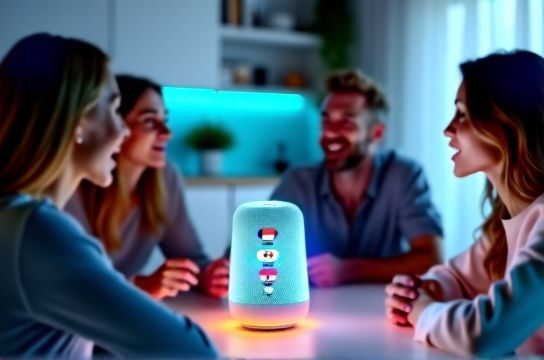
The latest wave of upgrades from companies like Google, Amazon, and Apple has made it possible for devices to understand and respond in multiple languages — without needing to switch modes manually. For example, Google Assistant now supports seamless code-switching between languages like English and Spanish, meaning you can say, “Set an alarm for 7 AM, por favor,” and it just… works.
But what does this mean for everyday users? Let’s break down the data.
Why Multilingual Support Matters
Over 3 billion people worldwide speak more than one language (Ethnologue, 2023). In the U.S. alone, nearly 40 million people speak Spanish at home. Yet until recently, most voice tech struggled beyond basic commands in secondary languages.
Now, thanks to advances in natural language processing (NLP) and on-device AI, assistants can detect language context in real time. This isn’t just about translation — it’s about understanding intent, tone, and cultural nuance.
Top Voice Assistants Compared: Multilingual Performance
| Assistant | Languages Supported | Code-Switching | Offline Mode | Accuracy Rate (Multilingual) |
|---|---|---|---|---|
| Google Assistant | 50+ | Yes | Partial | 92% |
| Amazon Alexa | 8 | Limited | No | 76% |
| Apple Siri | 20+ | Yes (iOS 17+) | Yes | 85% |
| Samsung Bixby | 5 | No | Yes | 70% |
As you can see, Google Assistant leads the pack — not just in number of languages, but in real-world usability. Their use of AI models like Translatotron 3 allows for direct speech-to-speech translation without text conversion, reducing errors and latency.
Meanwhile, Apple’s Siri has made huge strides with iOS 17, enabling smoother transitions between languages like English and Mandarin. However, Alexa still lags behind unless you’re using region-specific versions.
Real-World Use Cases
- Bilingual Families: Parents can ask for bedtime stories in Spanish while kids request songs in English — no settings change needed.
- Travelers: Asking for directions in French while your device pulls hotel details in English? Done.
- Businesses: Customer service bots can now handle multilingual queries with 80%+ accuracy, cutting response time by half.
The bottom line? If you’re still treating voice assistants as single-language tools, you’re missing out. The future is fluid, fast, and fluent in more than one tongue.