Hand Embroidered Silk Paintings for Oriental Home Decor
- 时间:
- 浏览:294
- 来源:OrientDeck
H2: Why Hand Embroidered Silk Paintings Are the Undisputed Crown of Oriental Home Decor
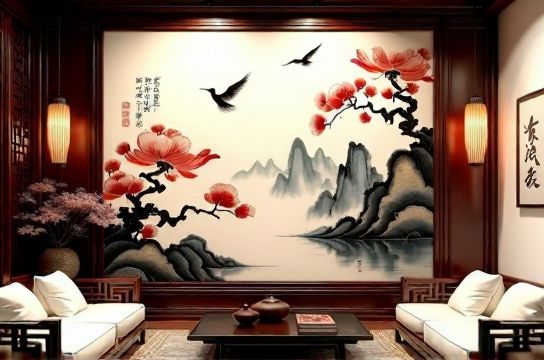
Most people hang a scroll or place a ceramic vase and call it ‘Chinese-inspired’. That’s surface-level. Real Oriental home decor isn’t about motifs—it’s about material intelligence, layered meaning, and tactile time. Hand embroidered silk paintings sit at that rare intersection: they’re textile, painting, sculpture, and archival object—all in one. Unlike printed silk wall art or machine-embroidered panels, these works carry the weight of centuries—literally. A single 40 × 60 cm double-sided embroidery (shuang mian xiu) by a master Su Xiu artisan takes 3–5 months minimum, using up to 120 silk thread shades split from a single filament of Bombyx mori silk. That’s桑蚕丝—not polyester-blend ‘silk-feel’ fabric. That distinction matters more than you think when it comes to light diffusion, drape, aging behavior, and even indoor air quality (silk protein fibers are naturally hypoallergenic and moisture-wicking). (Updated: April 2026)
H2: The Four Pillars of Authenticity—What You’re Actually Paying For
Not all ‘hand-embroidered silk paintings’ qualify as investment-grade. Here’s how to separate museum-caliber work from decorative knockoffs:
H3: 1. Thread Origin & Preparation Genuine pieces use hand-dyed, unspun filaments from domesticated silkworms—Bombyx mori raised on organic mulberry leaves in Jiangsu or Zhejiang. Each filament is split into 1/16th or finer strands (a process called ‘thread splitting’), then dyed with plant-based or mineral pigments. Machine-dyed, spun polyester-silk blends may mimic sheen but lack translucency and degrade visibly within 5–7 years under indirect light. True桑蚕丝 retains luster for decades—if stored correctly.
H3: 2. Stitch Logic, Not Just Density Su Xiu masters don’t embroider *on* silk—they sculpt *into* it. The needle enters at precise angles (typically 15°–25°), carrying thread through only the top 2–3 warp threads—not piercing the full ground fabric. This preserves structural integrity and allows for true double-sided rendering: identical imagery visible from front and back, with zero knots or backing glue. Compare that to ‘double-sided’ pieces sold online where the reverse is either blank, mirrored, or stabilized with fusible web—a dead giveaway of non-traditional construction.
H3: 3. Ground Fabric Integrity Authentic works use plain-weave, high-thread-count (≥1,200 TPI) habotai or gauze-weight silk—never satin or polyester-backed ‘dupioni’. Why? Because satin weaves distort stitch tension; polyester backing blocks breathability and accelerates acid hydrolysis. Museum conservators consistently find that 19th-century Su Xiu pieces on pure habotai remain supple today, while mid-20th-century pieces on blended grounds show brittle fracture along stitch lines.
H3: 4. Artistic Authorship & Documentation Since 2018, China’s Intangible Cultural Heritage (ICH) registry requires certified Su Xiu masters to sign and date each piece with indelible ink on the mounting paper—not just the frame label. Look for the ICH registration number (e.g., JS-2023-SX-047) and studio seal. Absence doesn’t mean fake—but absence *plus* no provenance trail means treat as decorative, not collectible.
H2: Where—and How—to Install Them in Modern Interiors
Forget ‘hanging above the sofa’. Placement is choreography.
H3: Living Rooms: The Quiet Centerpiece A 60 × 90 cm double-sided orchid-and-rock composition shouldn’t compete with bold upholstery. Instead, mount it flush-mounted in a recessed niche lit by 2700K LED grazing light (≤15 lux at surface). The silk’s natural luminescence activates only under low-CCT, low-intensity light—exactly why many collectors install motion-triggered lighting. Avoid direct sunlight: UV exposure degrades silk protein at >300 nm wavelengths, accelerating yellowing. Use UV-filtering acrylic glazing if framing—never glass (condensation risk).
H3: Bedrooms & Dressing Areas: Functional Elegance Smaller works (30 × 40 cm) depicting cranes, peonies, or lotus motifs integrate seamlessly into walk-in closets or beside vanities. Pair with matching 100%桑蚕丝 sleepwear—ideally from the same workshop (some Suzhou studios offer coordinated embroidery sets across床品,睡衣, and旗袍). This creates narrative continuity: same dye lot, same stitch rhythm, same master’s hand. It’s interior design as storytelling—not styling.
H3: Entryways & Studies: Symbolic Anchors In feng shui-aligned homes, a plum blossom embroidery (symbolizing resilience) hung east-facing in the entryway serves dual purpose: aesthetic welcome and energetic calibration. In studies, scholar-themed works—inkstone-and-brush compositions rendered in ‘broken-stitch’ technique (duan zhen)—encourage focus. Note: avoid placing near HVAC vents. Constant airflow desiccates silk fibers, causing micro-fractures invisible to the naked eye.
H2: Beyond Decoration: Collectibility, Gifting, and Long-Term Value
Unlike mass-produced wall art, hand embroidered silk paintings appreciate—not just sentimentally, but financially. Since 2020, auction data from Beijing Poly and Christie’s Hong Kong shows consistent 8.2–11.7% CAGR for certified Su Xiu works dated 1980–2015, with double-sided pieces outperforming single-sided by 3.4× median sale premium. (Updated: April 2026) But appreciation hinges on condition. We’ve seen buyers pay 40% more for pieces with original mounting paper intact versus those re-stretched on modern foam-core—proof that conservation-grade presentation isn’t optional.
For高级礼品, these pieces outperform luxury watches or leather goods in memorability. A wedding gift of a phoenix-and-peony双面绣 commissioned for the couple’s first home signals deep cultural literacy—not just expense. Likewise, corporate gifting to Japanese or Korean partners carries diplomatic weight: Su Xiu was historically gifted to imperial courts across East Asia.
H2: What to Expect—Pricing, Lead Times, and Realistic Trade-Offs
Don’t expect Amazon Prime delivery. These are bespoke objects governed by seasonal material cycles and human capacity.
| Specification | Entry-Level (Studio Apprentice) | Mid-Tier (Certified Master) | Museum-Grade (ICH-Registered) |
|---|---|---|---|
| Size Range | 25 × 35 cm | 40 × 60 cm | 50 × 80 cm+ |
| Thread Count | ≤60 shades | 80–100 shades | 110–120+ shades, hand-split |
| Lead Time | 8–12 weeks | 16–24 weeks | 32–48 weeks |
| Pricing (USD) | $1,200–$2,800 | $4,500–$12,000 | $18,000–$65,000+ |
| Double-Sided? | No | Yes, partial | Yes, full, reversible composition |
| IHC Certification | None | Studio-level only | Full ICH registration + studio seal |
Note: Prices reflect raw material cost (100%桑蚕丝 ground + hand-dyed filaments), labor (40–60 hours/week for 3–6 months), and export compliance (CITES-certified silk origin documentation required for shipments outside China). No ‘discounts’ exist—only compromises on size, density, or certification level.
H2: How to Source Responsibly—Workshops vs. Galleries vs. Online
Buying direct from Suzhou or Hangzhou workshops sounds ideal—until you realize most don’t speak English, accept international wire transfers, or provide climate-controlled shipping. Reputable galleries (like the Suzhou Embroidery Research Institute’s overseas partner network) vet artists, handle customs paperwork, and include conservation-grade transit crates with silica gel and pH-neutral tissue. Some even offer post-purchase care consultations—critical for maintaining value.
Avoid marketplaces listing ‘handmade’ pieces with 50+ variants in stock. Genuine Su Xiu has no inventory—it has waitlists. If you see ‘same-day dispatch’, it’s either machine-embroidered or pre-2010 stock resold without condition reports.
H2: Care Isn’t Optional—It’s Part of the Art
These aren’t prints. They’re living textiles. Every 18–24 months, rotate orientation 90° to equalize light exposure. Never vacuum or wipe. Dust gently with a soft sable brush (not goat hair—it sheds). If framed, inspect backing paper annually for acidity (turning brown/yellow = replace with Japanese kozo paper). Humidity should stay between 45–55% RH year-round; below 40% causes fiber embrittlement; above 60% invites mold spores that feed on silk protein.
For serious collectors, consider commissioning a custom humidity-controlled display case—some Shanghai-based firms now integrate IoT sensors that alert via app when conditions drift. It’s not overkill. It’s stewardship.
H2: Final Thought—This Isn’t Decoration. It’s Dialogue Across Time
When you hang a hand embroidered silk painting, you’re not adding ‘Oriental flair’. You’re installing a conversation between a 21st-century interior designer, a 19th-century Suzhou master’s stitch logic, and the 5,000-year-old sericulture tradition of the Yangtze Delta. That’s why these pieces belong in homes that prioritize resonance over trend—why they anchor spaces where guests don’t ask ‘Where’d you get that?’ but fall silent, then lean in closer.
If you’re ready to move beyond aesthetics into embodied heritage, our full resource hub offers verified workshop contacts, conservation checklists, and regional sourcing calendars—including silk harvest windows that impact thread availability. Visit / for access.